"All you need is love, but a little chocolate now and then doesn't hurt."

"All you need is love, but a little chocolate now and then doesn't hurt."
Showing posts with label journey. Show all posts

Sunday, November 30, 2014

Along the Way: The Journey of a Father and a Son


Our Journey in Literature class has provided us a vast amount of knowledge about the terms related to the journey as an internal and external experience and I chose the dual memoir book of a father and a son entitled Along the Way to discuss them. I'm going to present you the summary of the book and right after it I'm going to provide you my own interpretation. 

"In this remarkable dual memoir, film legend Martin Sheen and accomplished actor/filmmaker Emilio Estevez recount their lives as father and son. In alternating chapters—and in voices that are as eloquent as they are different—they tell stories spanning more than fifty years of family history, and reflect on their journeys into two different kinds of faith. 

At twenty-one, still a struggling actor living hand to mouth, Martin and his wife, Janet, welcomed their firstborn, Emilio, an experience of profound joy for the young couple, who soon had three more children: Ramon, Charlie, and Renée. As Martin’s career moved from stage to screen, the family moved from New York City to Malibu, while traveling together to film locations around the world, from Mexico for Catch-22 to Colorado for Badlands to the Philippines for the legendary Apocalypse Now shoot. As the firstborn, Emilio had a special relationship with Martin: They often mirrored each other’s passions and sometimes clashed in their differences. After Martin and Emilio traveled together to India for the movie Gandhi, each felt the beginnings of a spiritual awakening that soon led Martin back to his Catholic roots, and eventually led both men to Spain, from where Martin’s father had emigrated to the United States. Along the famed Camino de Santiago pilgrimage path, Emilio directed Martin in their acclaimed film, The Way, bringing three generations of Estevez men together in the region of Spain where Martin’s father was born, and near where Emilio’s own son had moved to marry and live. 

With vivid, behind-the-scenes anecdotes of this multitalented father’s and son’s work with other notable actors and directors, Along the Way is a striking, stirring, funny story—a family saga that readers will recognize as universal in its rebellions and regrets, aspirations and triumphs. Strikingly candid, searchingly honest, this heartfelt portrait reveals two strong-minded, admirable men of many important roles, perhaps the greatest of which are as fathers and sons." (Amazon)


Martin and Emilio were in a journey together and still they are. Both of them learned from each other many aspects of life and shared his experiences in order to keep strengthening his relationship. In many ways, their personal lives are completely correlated with his professional careers. After fifty years they live a comfortable life with each other, despite their differences about faith. Like Emilio said, "Success to my grandfather was not measured by what a man achieved in his career or how much money he made but by the state of his health, his relationships with his children, and the strength of his marriage. I think that's how my father always defined success as well." (393). Finally, I think I should close this entry by the last sentence in the book given by Emilio. "The man who for so many years walked ahead of me, who briefly walked a separate path, and who now walks by my side." (Sheen and Estevez 394).

Tuesday, November 18, 2014

Reflection on Group Work: Fortunate Travelers!


At the beginning of our Journey in Literature class, we were assigned to work in a group. At first, I was hoping the professor let us chose the people we wanted to work with because I knew two people before we took this class, but the professor selected the groups we would have to work during the whole semester. The first day we had to work in the group we were really a bunch of strangers. We didn't know each other. That first approach was very formal. We told each other our names, we share our phone numbers and emails, and we also create a group message in Whatsapp to establish contact more easily. During this class, we also divide our roles in the group and selected a group name: Fortunate Travelers. Valeria and Liane were the note takers, Héctor and Antonio worked as the researchers, Manuel was the conflict solver and I act as the task manager of the group.

Meeting new people can be an interesting and enriching experience or an awful one. Since we did not know each other, I think we were very timid those first days of class. As time progressed, we started talking to each other more than the beginning of the course and we felt more comfortable sharing our thoughts and discussing our opinions. We are very different, but agree with a group opinion was never a big trouble for us. The first group project we had to present in front of class was about Jamaica Kincaid's novel "A Small Place". We search for information about the author, we looked out for quotes that supported our point of view, and  we wrote about the different themes on the reading. Finally, we made our oral presentation and we felt comfortable with it. Unfortunately, we did not felt very happy with the grade we received  from its analysis and I believe this experience helped us to join more as a group and worked more than we were already working to obtain a good grade in the next group project.

This is the poster we made for the oral
 presentation about Carl Jung's travel to North Africa.
The final oral presentation about Carl Jung is the highlight of our group work. We had the same purpose: obtain a better grade. We took it very seriously and we search for information about the author and quotes that support our argument. We decided to meet up during the weekend to make sure we do a great presentation. During the meeting, we finished our analysis on the different themes such as othering, in-group, out-group, location, identity, and perspective, and we also had the opportunity to prepare a poster to explain better the location theme. This experience helped us to grow as a group and know more about each other. We shared our opinions and we respected each other.

It has been an honor to work with you, guys! We all worked hard and I'm thankful with all of you. I had told meeting new people can be an interesting and enriching experience or an awful one. Well, the last thing I had to say is that meeting Valeria, Liane, Hector, Antonio and Manuel was an interesting and enriching experience! I had learned that group work are not always bad. We can gain a lot of knowledge from many of them.

Saturday, October 4, 2014

Internal Journey: A Reflection on my Journey Journal


As part of our Journey in Literature class, it was assigned a special project that consisted in writing into a journal for eight weeks. At first, I felt scared because I'm not very good in English grammar and vocabulary and I was thinking about  how I was supposed to write in it having this kind of situation. The first reflection took place in the classroom and it was like a challenge for me. First, I must keep my hand moving during ten minutes, but it was  difficult because I had to translate all the thoughts in my mind to the English language and my hand started to hurt at the fifth minute, approximately. Second, to lose control and go for the jugular was a little hard because I think my thoughts weren't really interesting and crazy ones.

After the first week of writing on my journal, I started to feel more comfortable with my writing, but I know I have to continue improving  it. I had also talked about the difficult part of this experience, but I want to let you know the bearable part. The other instructions we had to followed on the journal were that we can't cross out, didn't worry about spelling, punctuation, and grammar, and don't think nor get logical. These instructions were more easy for me because I didn't really worry about how I wrote any word or sentence during the ten minutes. I simply wrote whatever I thought at that moment and most of the times I didn't get logical. Most of my entries are sentences without any logical sense. I like it because it helped me to wrote more fast in a given time. This practice helped me to explore my internal journey after experienced my external journey. I also had the opportunity to wrote about my dreams after I woke up in the morning and I felt more comfortable because I remembered most part of my dreams. The journey journal is a reflection of my inner journey; a journey many people didn't know about and a one from which I had also learned about myself.


Another thing we had to do in our journal was three life compasses per week. These compasses helped me to have a better understanding of my everyday situations inviting me to think about my spiritual or natural, mental, emotional, and physical state. Life compasses were variable as the entries, but I have learned many things from each one of them.  This activity also helped me to being relaxed and satisfied when doing my daily's reflections. I'm looking  forward to keep discovering and working with my internal and external journey throughout my entire life.


Sunday, August 24, 2014

Reflection on Billy Mills


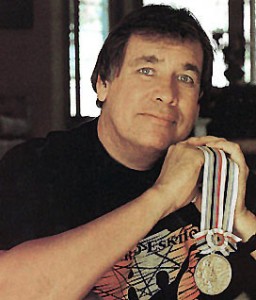
Running Brave is a movie based on a true story about a Native American, Billy Mills, who won the 10,000 meter Gold Medal in the Tokyo Olympics from 1964. Throughout the movie, we can see how Billy has to deal with "both worlds": his internal and external journey. The movie shows up racism and marginalization taking from the point of Billy's origin; of Billy's way of being. Billy was raised in an Indian Reservation in South Dakota and he encounters with the opportunity to go to the University of Kansas because of his marvelous performance in running. As he arrived at the University, he started facing his external journey. Everything was different from his life at the reservation. He started to dealing with racism for being an Indian. Something that caught my attention and relates to this racism is the scene where Billy was asked if he was from Puerto Rico. Why did that student asked him this? I think it's all about the racism not only with the Native American people, but also with people from other countries and ethnicities.

Do people must change and leave back his feelings and emotions away to try to fix in a group? No, and this is what specifically Billy teaches us. Here is the point when both internal and external journey merge together. Instead of the request from the coach to play dirty, he was convinced in himself and on what he can do and therefore he followed his feelings and emotions. Billy's decisions shows how his principles were defined.  It's not about to live and survive the unexpected situations from the external journey; it's about to deal with the feelings from the internal journey to succeed in the external way. 


"But my thoughts changes from 'one more try, one more try' to 'I can win, I can win, I can win'." -Billy Mills

About Billy Mills: http://indianyouth.org/billy-mills

Check out this video: https://www.youtube.com/watch?v=5F5iCsymMj0